Carnatic Music and Its Influence
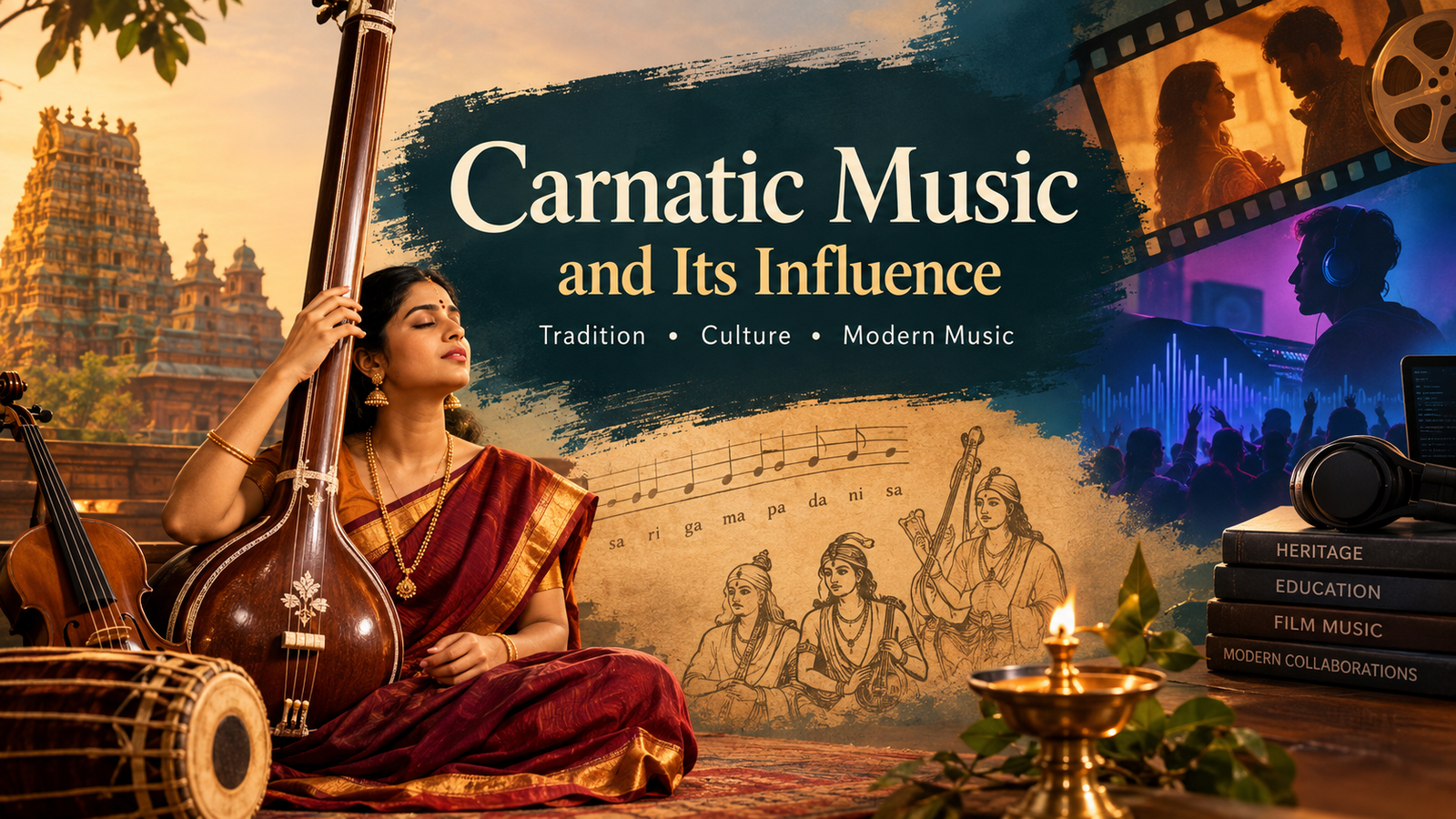
Carnatic music is a major South Indian classical tradition with its own compositions, performance practices and instruments. The veena, violin, mridangam, ghatam and flute are heard regularly in concerts. Vocal performance remains central, and compositions often balance structure with space for interpretation.
Its influence extends beyond concert halls. Film composers, independent musicians and fusion artists may adapt Carnatic rhythmic ideas or melodic phrases for new audiences. For anyone exploring Indian and English music, Carnatic recordings offer a useful reminder that technical complexity and emotional accessibility can exist together.
Practical listening ideas
Explore Carnatic music, its influence by listening to one familiar track, one older recording and one independent release. Compare the vocal style, rhythm, instruments and lyrics. This simple habit turns Indian and English music from background sound into an enjoyable learning experience without making listening feel like homework.
- Choose one song for close listening with headphones.
- Read the lyrics or a translation when the words interest you.
- Save artists and styles you want to explore again.
Bollywood and Film Music
Film music has shaped popular listening in India for decades. A successful soundtrack may include a romantic duet, an emotional solo, a wedding song, a party track and a dramatic background theme. Because songs are connected to scenes, characters and dance, they often stay in the audience memory long after a film has been watched.
Modern film music often combines Indian instruments with electronic beats, guitar, orchestral arrangements, rap verses and international pop structures. This makes Bollywood an accessible bridge between Indian and English music. The song may have Hindi lyrics and a local story while using a production style familiar to a global pop listener.
Practical listening ideas
Explore Bollywood, film music by listening to one familiar track, one older recording and one independent release. Compare the vocal style, rhythm, instruments and lyrics. This simple habit turns Indian and English music from background sound into an enjoyable learning experience without making listening feel like homework.
- Choose one song for close listening with headphones.
- Read the lyrics or a translation when the words interest you.
- Save artists and styles you want to explore again.
Regional Music Across India
Regional music is essential to understanding the scale of India. Punjabi music is widely known for energetic dhol-driven rhythms. Bengali songs can emphasise poetry and melody. Tamil and Telugu industries create major film and independent releases, while Marathi, Malayalam, Kannada, Bhojpuri and Assamese music continue to develop distinctive audiences and artists.
Language changes the texture of a song, but rhythm and emotion can cross language barriers. That is why listeners who do not understand every lyric may still enjoy a regional hit. Indian and English music both prove that a strong beat, vocal performance or melody can communicate before every word is understood.
Practical listening ideas
Explore regional music across India by listening to one familiar track, one older recording and one independent release. Compare the vocal style, rhythm, instruments and lyrics. This simple habit turns Indian and English music from background sound into an enjoyable learning experience without making listening feel like homework.
- Choose one song for close listening with headphones.
- Read the lyrics or a translation when the words interest you.
- Save artists and styles you want to explore again.
Folk and Devotional Traditions
Folk music preserves local stories, work songs, seasonal celebrations, dances and community identity. It may use simple instruments and repeated refrains that encourage group participation. Devotional traditions such as bhajans, qawwalis and Shaba’s often create a reflective atmosphere through repetition, call-and-response singing and powerful vocal expression.
These forms are valuable because they keep music connected to real social life. They also inspire contemporary artists who sample folk instruments, adapt old lyrics or collaborate with traditional performers. Indian and English music continues to grow when old forms are respected rather than treated as museum pieces.
Practical listening ideas
Explore folk, devotional traditions by listening to one familiar track, one older recording and one independent release. Compare the vocal style, rhythm, instruments and lyrics. This simple habit turns Indian and English music from background sound into an enjoyable learning experience without making listening feel like homework.
- Choose one song for close listening with headphones.
- Read the lyrics or a translation when the words interest you.
- Save artists and styles you want to explore again.

Indian Pop and Independent Artists
Indian pop and independent music provide space outside film soundtracks. Artists can release personal songs, experimental projects, acoustic sessions and genre-focused records without fitting a film situation. Streaming platforms have made it easier for listeners to find smaller artists, language-specific scenes and new collaborations.
Independent artists often mix familiar Indian vocal styles with global pop, rap, electronic or rock production. This is one reason Indian and English music is increasingly difficult to separate into neat boxes. A track can use English lyrics in the chorus, Hindi in the verse, a Punjabi rhythm and a producer influenced by international dance music.
Practical listening ideas
Explore Indian pop, independent artists by listening to one familiar track, one older recording and one independent release. Compare the vocal style, rhythm, instruments and lyrics. This simple habit turns Indian and English music from background sound into an enjoyable learning experience without making listening feel like homework.
- Choose one song for close listening with headphones.
- Read the lyrics or a translation when the words interest you.
- Save artists and styles you want to explore again.
English Pop Music
Pop music is designed around memorable melodies, clear hooks and concise song structures. It may use electronic production, piano, guitar, programmed drums or orchestral elements. The chorus is usually the emotional centre of the song, giving listeners a line they can easily remember and sing.
Pop is a useful entry point for listeners exploring Indian and English music because it is flexible. Indian pop and film songs also rely on strong hooks, repeated refrains and polished production. Comparing the two can show how artists adapt a similar goal – creating an immediate emotional connection – to different languages and cultural settings.
Practical listening ideas
Explore English pop music by listening to one familiar track, one older recording and one independent release. Compare the vocal style, rhythm, instruments and lyrics. This simple habit turns Indian and English music from background sound into an enjoyable learning experience without making listening feel like homework.
- Choose one song for close listening with headphones.
- Read the lyrics or a translation when the words interest you.
- Save artists and styles you want to explore again.
Frequently Asked Questions
What is the main difference between Indian and English music?
The main differences usually involve language, cultural context, melodic phrasing, rhythm, instruments and production traditions. Both categories contain many genres, so comparisons should remain flexible rather than absolute.
Can Indian and English music be mixed in one song?
Yes. Many current songs combine Hindi, Punjabi, Tamil or other Indian languages with English lyrics, rap, electronic production and global pop influences. Fusion can work well when each element is used thoughtfully.
Which is better, Indian music or English music?
Neither is universally better. The best choice depends on mood, language preference, cultural connection, favourite artists and the kind of sound you enjoy at a particular time.
Why is Indian music popular around the world?
Film music, diaspora communities, regional artists, streaming platforms, dance culture and international collaborations have all helped Indian music reach wider audiences. Its melodic richness and emotional storytelling also connect with listeners across languages.
How can I make a playlist with both styles?
Start with the activity or mood, not the language. Combine songs with similar energy, then adjust the order so transitions feel natural. Save tracks that work well together and update the playlist as you discover more music.
Conclusion
Indian and English music offers far more than a choice between two languages. It gives listeners access to classical traditions, regional stories, film songs, folk sounds, pop hooks, rap, rock, electronic production and personal song writing. The most satisfying way to listen is with curiosity: notice what a song makes you feel, learn where its sound comes from and allow your playlist to include both familiar favourites and unexpected discoveries.
Whether you listen for relaxation, celebration, creativity or connection, Indian and English music can make everyday moments more meaningful. Explore different genres, support artists whose work you enjoy and keep building playlists that reflect your own memories, mood and musical idea.
Positive Influence of Carnatic Music
Carnatic music has had a strong positive influence on Indian culture, education, and the development of music.
1. Preservation of Indian Musical Heritage
One of the most important contributions of Carnatic music is the preservation of India’s musical heritage. Traditional compositions, ragas, rhythmic patterns, and performance techniques have been passed from one generation to another.
This helps younger generations understand and appreciate India’s classical music traditions.
2. Development of Musical Discipline
Learning Carnatic music requires regular practice, patience, concentration, and dedication. Students spend years developing their understanding of pitch, rhythm, pronunciation, and musical expression.
This structured learning process can help students develop discipline and consistency in their musical practice.
3. Influence on Indian Film Music
Carnatic music has influenced many Indian film composers and singers. Elements of Carnatic ragas, classical vocals, rhythms, and traditional instruments can be heard in numerous film songs.
Film composers have often adapted classical musical ideas into accessible forms, allowing a wider audience to experience elements of Carnatic music.
4. Encourages Creativity and Improvisation
Carnatic music is not limited to memorizing compositions. Improvisation is an important part of a performance.
Musicians can creatively explore a raga while following its musical structure. This combination of discipline and creativity makes Carnatic music a unique form of musical expression.
5. Connection With Indian Culture
Carnatic music has a close relationship with South Indian culture and traditions. It is performed at concerts, festivals, temples, cultural events, and other important occasions.
Because of this connection, Carnatic music acts as both an artistic tradition and a way of preserving cultural identity.
Negative Aspects and Challenges of Carnatic Music
Although Carnatic music has many positive influences, it also faces several challenges in the modern world.
1. Difficult Learning Process
Learning Carnatic music can be challenging for beginners. Students need to spend significant time practicing basic exercises, compositions, ragas, and rhythmic patterns.
The long learning process may sometimes discourage people who are looking for quick or casual ways to learn music.
2. Limited Accessibility for Beginners
Traditional Carnatic performances can be difficult to understand for people who have never been exposed to classical music.
Complex ragas, rhythmic patterns, and lengthy performances may make it challenging for new listeners to immediately connect with the music.
3. Perception of Being Too Traditional
Some younger audiences may view Carnatic music as an older or highly traditional form of music. This perception can make it more difficult to attract listeners who mainly prefer modern genres.
However, many musicians are now using social media, collaborations, and modern presentation styles to introduce Carnatic music to younger audiences.
4. Competition From Modern Music
Genres such as pop, hip-hop, electronic music, and independent music are highly popular among younger listeners. Streaming platforms and social media have also changed the way people discover and consume music.
As a result, Carnatic musicians face the challenge of maintaining traditional practices while finding new ways to connect with modern audiences.
Carnatic Music and Modern Music
Carnatic music continues to influence modern music in many different ways. Musicians can incorporate ragas, rhythmic patterns, classical vocals, and traditional instruments into contemporary compositions.
Fusion music is one example of this development. Carnatic elements can be combined with genres such as jazz, rock, electronic music, and other contemporary styles.
These collaborations can introduce Carnatic music to listeners who may not normally listen to traditional classical music.
Influence of Carnatic Music on Indian Culture
The influence of Carnatic music extends beyond musical performances. It has an important role in cultural celebrations, education, devotional traditions, and artistic expression.
Music schools, cultural organizations, concerts, festivals, and online learning platforms help preserve Carnatic music and make it accessible to people in different parts of the world.
Today, digital platforms have also made it easier for students and listeners to discover Carnatic musicians, performances, and educational content.
The Future of Carnatic Music
The future of Carnatic music depends on maintaining a balance between tradition and innovation. Preserving traditional compositions and musical techniques is important, but adapting to modern platforms can help the art form reach new audiences.
Social media, music streaming platforms, online classes, and collaborations with contemporary artists provide new opportunities for Carnatic musicians.
By using these platforms while respecting its traditional foundations, Carnatic music can continue to remain relevant for future generations.
Conclusion
Carnatic music and its influence continue to play an important role in India’s musical and cultural heritage. It has helped preserve traditional musical knowledge while also influencing film music, modern compositions, education, and contemporary musicians.
At the same time, challenges such as its demanding learning process, accessibility for beginners, and competition from modern music cannot be ignored.
The continued growth of Carnatic music will depend on how successfully tradition and modern innovation can work together. With the help of technology, education, and creative collaborations, Carnatic music can continue to inspire musicians and listeners around the world.
Carnatic music is therefore not only a connection to India’s musical past but also a tradition with the potential to influence the future of music
Carnatic music is therefore not only a connection to India’s musical past but also a tradition with the potential to influence the future of music
Carnatic music is therefore not only a connection to India’s musical past but also a tradition with the potential to influence the future of music
Carnatic music is therefore not only a connection to India’s musical past but also a tradition with the potential to influence the future of music
Carnatic music is therefore not only a connection to India’s musical past but also a tradition with the potential to influence the future of music
Carnatic music is therefore not only a connection to India’s musical past but also a tradition with the potential to influence the future of music
Carnatic music is therefore not only a connection to India’s musical past but also a tradition with the potential to influence the future of music
Carnatic music is therefore not only a connection to India’s musical past but also a tradition with the potential to influence the future of music
Carnatic music is therefore not only a connection to India’s musical past but also a tradition with the potential to influence the future of music
Carnatic music is therefore not only a connection to India’s musical past but also a tradition with the potential to influence the future of music